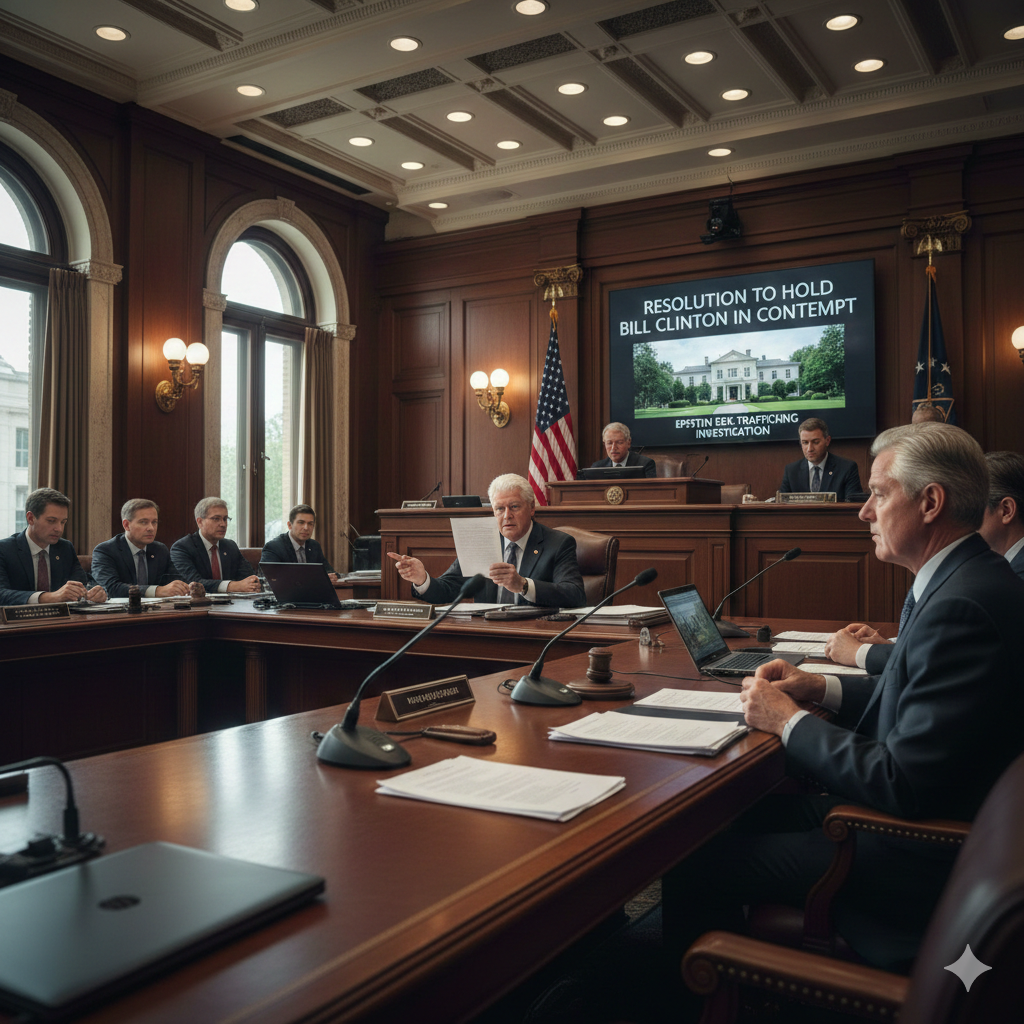
Congressional Oversight Intensifies: Ansari Leads Epstein Investigation into Wexner and Clinton
The halls of Congress have witnessed countless investigations, but few carry the weight and public scrutiny now surrounding Representative Yassamin Ansari’s leadership in the ongoing Jeffrey Epstein oversight inquiry. As the congressional committee pushes forward with depositions of high-profile figures, including retail magnate Leslie Wexner and former President Bill Clinton, Americans are watching closely to see whether the legislative branch can extract accountability from some of the nation’s most powerful individuals. This isn’t just another political theatre production—it represents a critical test of whether congressional oversight mechanisms can function effectively when confronting elite circles that have historically operated beyond meaningful scrutiny.
Representative Ansari’s involvement signals a generational shift in how Congress approaches sensitive investigations. Her methodical approach to the Wexner deposition has already established precedents for how committees can navigate the complex legal and political minefields surrounding figures with vast resources and sophisticated legal teams. Simultaneously, the contempt resolution against Clinton marks an extraordinary moment—rarely do former presidents face such formal congressional rebuke, and the decision reflects the committee’s determination that no individual, regardless of past office or current influence, stands above the obligation to cooperate with legitimate oversight.
Examining the High-Profile Associates: Wexner and Clinton Under the Microscope
Leslie Wexner’s relationship with Jeffrey Epstein has long puzzled observers who wondered how a successful retail executive came to place such extraordinary trust in a financier whose credentials never quite matched his lifestyle. The “decades-long financial and personal relationship” between Wexner and Epstein went far beyond typical professional boundaries. Epstein held power of attorney over Wexner’s finances, occupied a Manhattan mansion that Wexner had purchased, and enjoyed access to the L Brands corporate infrastructure in ways that still raise uncomfortable questions about due diligence and oversight.
Congressional investigators are particularly focused on understanding when Wexner first became aware of Epstein’s activities and what actions, if any, he took in response. The timeline matters enormously—if Wexner possessed knowledge of illegal conduct yet maintained the relationship, it raises questions about potential complicity or at minimum a troubling willingness to overlook serious red flags for personal or financial convenience.
Former President Clinton’s involvement presents different but equally significant concerns. His history as a passenger on Epstein’s private aircraft has been documented through flight logs, yet the frequency, purposes, and knowledge surrounding these trips remain contested. More troubling are allegations that Clinton or his representatives attempted to influence media coverage of his Epstein connections—if substantiated, such efforts would represent a serious abuse of influence intended to obscure potentially relevant information from public scrutiny.
The deposition process aims to establish clear factual records about these relationships. Congressional investigators recognize that memory can be conveniently selective, which is why detailed questioning about specific dates, conversations, and interactions becomes essential. The goal isn’t necessarily to prove criminal conduct by these witnesses themselves, but rather to understand the broader network that enabled Epstein’s activities to continue for decades despite numerous warning signs.
The Timeline of Non-Compliance: From Subpoenas to Contempt
The congressional committee’s journey toward the contempt resolution against Clinton followed a deliberate, methodical path designed to withstand legal challenges. On August 5, 2025, subpoenas were issued to ten high-ranking officials whose testimony was deemed essential to understanding the full scope of Epstein’s operations and the failures that allowed them to continue. These weren’t casual requests for voluntary cooperation—they were formal legal demands backed by congressional authority.
What followed was a five-month negotiation process that tested the committee’s patience and resolve. Clinton’s legal team employed various delay tactics that, while perhaps standard practice in high-stakes litigation, frustrated investigators who viewed such maneuvers as attempts to run out the clock on congressional authority. Rescheduling of Clinton’s deposition became a repetitive pattern, with each new date accompanied by fresh excuses about scheduling conflicts, health considerations, or procedural objections.
The breaking point arrived on January 13, 2026, when Clinton failed to appear for his scheduled deposition despite previous agreements. Instead, his attorneys submitted a written declaration that committee members deemed insufficient—a document that likely provided carefully crafted non-answers to specific questions while avoiding the spontaneity and follow-up questioning that makes depositions valuable investigative tools.
This act of defiance forced the committee’s hand. Congressional oversight only functions if witnesses actually comply with subpoenas. Allowing high-profile individuals to simply ignore congressional authority would establish dangerous precedents suggesting that power and privilege can override constitutional obligations. The contempt resolution wasn’t punitive vindictiveness—it was necessary enforcement of legitimate governmental authority.
Strengthening Federal Governance Through Comprehensive Oversight
The investigation’s ultimate value extends far beyond determining what specific individuals knew and when they knew it. Congressional committees examining the Epstein case are simultaneously studying systemic failures that allowed sex trafficking to occur despite numerous opportunities for intervention. Learning from these operational failures provides the foundation for developing better preventative legislation that might identify and disrupt similar criminal enterprises before they can victimize dozens of young women over multiple years.
Modern sex trafficking has evolved alongside technology, creating challenges that existing legal frameworks struggle to address. Epstein’s operation utilized international travel, sophisticated financial structures, and social connections that crossed traditional jurisdictional boundaries. Legislation crafted in response to these investigative findings could strengthen federal tools for prosecuting trafficking that exploits these same methods—creating longer criminal statutes of limitations, improving coordination between state and federal authorities, and enhancing financial monitoring of suspicious wealth transfers that might indicate trafficking proceeds.
The ethics and influence dimensions prove equally important. Congressional investigators are examining uncomfortable questions about how powerful individuals may have inadvertently or deliberately shielded illegal activities from scrutiny. This isn’t conspiracy theorizing—it’s acknowledging that influence operates subtly through social networks, implied expectations, and the reluctance of subordinates to challenge well-connected figures. Understanding these dynamics helps Congress consider reforms that might create more robust protections for whistleblowers, strengthen inspector general offices, and reduce the outsized influence that wealth can exert over investigative processes.
Upholding the Rule of Law: No One Above Congressional Authority
The committee’s rejection of recycled legal defenses from Clinton’s attorneys reflects a principled stance about congressional prerogatives. Executive privilege, attorney-client protections, and other legal shields have legitimate applications, but they cannot become blanket excuses for avoiding all congressional oversight. The committee evaluated each claimed privilege individually, determining that many assertions lacked sufficient specificity or stretched recognized doctrines beyond their appropriate bounds.
Historical precedents for contempt of Congress provide the legal framework supporting the committee’s actions. From the Teapot Dome investigations of the 1920s through modern-era contempt citations, Congress has periodically needed to enforce its investigative authority against resistant witnesses. Consistent application of congressional authority matters enormously—if committees only pursue contempt against politically vulnerable targets while exempting the well-connected, the entire oversight mechanism loses credibility and effectiveness.
The committee now faces the decision of whether to recommend criminal referral to the U.S. Attorney for the District of Columbia. This recommendation carries serious implications, potentially subjecting Clinton to prosecution for contempt of Congress—a misdemeanor carrying fines and possible imprisonment. The decision matrix considers multiple factors: the egregiousness of non-compliance, the importance of the sought testimony, precedential impacts, and whether civil contempt mechanisms might prove sufficient.
Ultimately, this investigation tests fundamental principles about American governance. Does congressional oversight still function as a meaningful check on power, or has it been reduced to partisan theater that powerful individuals can simply ignore? Can victims of crimes committed by well-connected perpetrators expect that justice systems will investigate thoroughly regardless of who might be embarrassed?
Representative Ansari’s leadership throughout this process has emphasized these core principles—that accountability applies universally, that congressional authority deserves respect regardless of which party wields it, and that discovering truth serves purposes beyond political advantage. As depositions continue and contempt proceedings advance, Americans are watching to see whether these principles still guide governmental action or whether power and privilege have eroded them beyond recognition. The answers emerging from this investigation will resonate far beyond the Epstein case itself, shaping public confidence in governmental integrity for years to come.