
Hashtags
#ToyotaSupra #2JZ #SupraMK4 #GRSupra #JDM #SportsCars #CarCollectors #Toyota #CarHistory #AutoGuide
Toyota Supra: The Ultimate History, Engine Guide, and Buying Resource
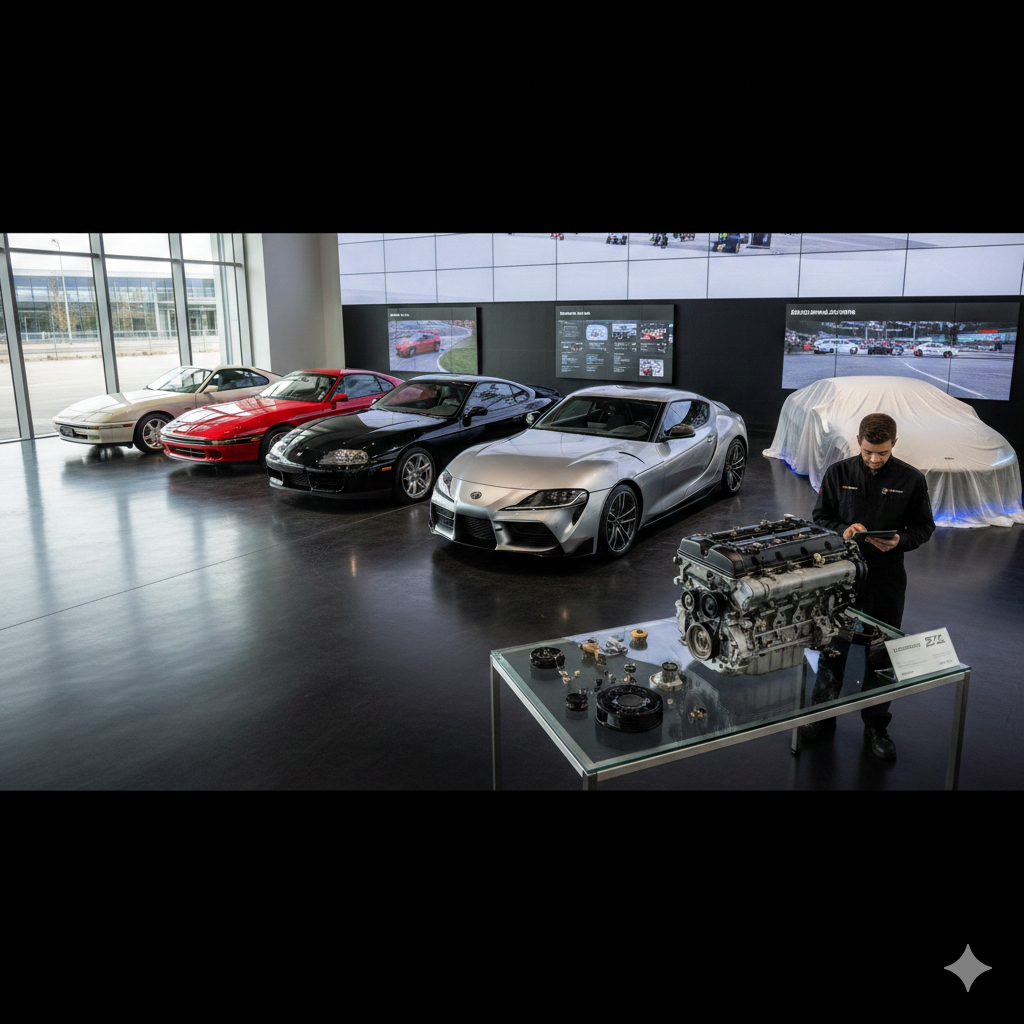
Few automotive nameplates command the reverence that Toyota Supra has earned across five decades of production. From its origins as an upscale Celica variant to its current status as a collector’s dream and tuner’s canvas, the Supra represents Japanese engineering ambition married to accessible performance. This isn’t just another sports car history—it’s the story of how Toyota repeatedly pushed boundaries, creating machines that balanced everyday usability with genuine supercar-challenging performance. Whether you’re a prospective buyer researching investment potential, an enthusiast seeking technical knowledge, or simply curious about automotive legends, understanding the Supra’s complete narrative reveals why this nameplate continues captivating car culture worldwide.
The Supra’s journey mirrors broader automotive industry transformations—from the grand touring philosophy of the 1970s through the raw performance focus of the 1990s, into today’s collaborative manufacturing era where heritage meets modern technology. Each generation responded to its specific market conditions and technological capabilities, yet all shared fundamental DNA: inline engines, rear-wheel drive, and the promise of exhilarating performance without exotic car maintenance nightmares.
Evolution Across Five Generations: From Celica Derivative to Standalone Icon
Early Years (1978–1986): Establishing Performance Credibility
The original Supra emerged in 1978 as the Celica Supra, essentially representing Toyota’s answer to market demand for more powerful, refined coupes that could compete against established European grand tourers. The A40 generation introduced the inline-six engine configuration that would become Supra’s signature, distinguishing it from the four-cylinder Celicas sharing showroom space. This wasn’t revolutionary engineering but rather intelligent market positioning—Toyota leveraged existing components while creating a distinct performance identity.
The A60 generation that followed refined this formula through improved aerodynamics and updated styling that maintained the elongated hood proportions necessary to accommodate that straight-six engine. These early Supras prioritized comfort and highway cruising capability over outright performance numbers, establishing reputations for reliability that would prove invaluable for the nameplate’s long-term credibility. Owners appreciated cars that delivered satisfying performance without the temperamental behavior plaguing European alternatives.
Moving Upmarket (1986–1992): The Dedicated Platform Era
Everything changed with the A70 generation, which marked Supra’s graduation from Celica variant to standalone model with its own dedicated platform. This wasn’t merely badge engineering—Toyota invested in creating a proper sports car architecture that could accommodate more powerful engines and sophisticated suspension systems. The introduction of the first Supra Turbo variant signaled serious performance intent, with turbocharged power delivery transforming the driving experience from refined cruiser to legitimate sports car.
The A70’s styling embraced late-1980s design language—angular, wedge-shaped profiles with pop-up headlights that seemed mandatory for period sports cars. While enthusiasts today might find the aesthetics somewhat dated, the engineering fundamentals proved sound. Toyota’s build quality meant these cars survived decades of use while maintaining functionality, unlike competitors whose electrical systems degraded and mechanical components wore prematurely.
The Supercar Challenger (1993–2002): Peak Performance and Legendary Status
The A80 Supra represents the nameplate’s absolute pinnacle—the generation that achieved legendary status through stunning design, extraordinary performance, and tuning potential that wouldn’t be fully appreciated until years after production ended. Its “less is more” design philosophy rejected the overwrought styling afflicting many 1990s performance cars, instead embracing clean lines and purposeful proportions that remain visually striking today.
This generation dominated 1990s performance car conversations through outright capability. The twin-turbocharged 2JZ-GTE engine delivered factory power figures that understated actual output while providing a robust foundation for modifications. Handling balanced accessibility with genuine capability—skilled drivers could extract remarkable performance while novices weren’t immediately punished for mistakes. The A80 achieved what few sports cars manage: appealing simultaneously to casual enthusiasts and hardcore track devotees.
Perhaps more importantly, the A80 became a cultural phenomenon extending far beyond automotive circles. Appearances in video games and films, particularly “The Fast and the Furious” franchise, introduced the Supra to audiences who might never attend car meets or read automotive magazines. This mainstream visibility transformed the A80 from excellent sports car into automotive icon, fundamentally altering its collector market trajectory.
The Modern Revival (2019–2026): Heritage Meets Collaboration
After seventeen years of absence, Toyota revived the Supra nameplate in 2019 through unprecedented collaboration with BMW. The GR Supra A90 generated controversy immediately—purists objected to the BMW-sourced engine and platform, arguing that a true Supra demanded Toyota engineering throughout. Yet objective evaluation reveals a genuinely excellent sports car that honors heritage while embracing modern realities about development costs and platform sharing.
The introduction of an intelligent Manual Transmission (iMT) option addressed criticisms about automatic-only availability, providing enthusiasts the engagement they craved. This wasn’t a simple gearbox swap but rather a thoughtfully engineered manual that incorporated rev-matching technology and optimized gear ratios for the turbocharged inline-six’s power characteristics.
Toyota’s announcement of the 2026 final production run creates immediate collector interest while providing closure to this collaborative chapter. Whether future Supras will emerge remains uncertain, lending the A90’s final editions particular significance for enthusiasts wanting to own the last iteration of this storied nameplate.
Technical Focus: The 2JZ-GTE Powerhouse That Redefined Tuning Culture
Factory Specifications: Engineering for Reliability and Performance
The 2JZ-GTE engine represents Toyota’s engineering philosophy distilled into 3.0 liters of inline-six perfection. The cast-iron block provided strength and durability that aluminum alternatives couldn’t match at similar costs, creating foundations capable of withstanding enormous power increases. Sequential twin turbochargers delivered responsive low-end torque while minimizing the lag that plagued single large turbo setups, creating power delivery that felt linear and controllable across the rev range.
Factory specifications listed 320 horsepower for most markets, though widespread dynamometer testing revealed actual output typically exceeded these conservative figures. Toyota’s understating approach reflected Japanese manufacturers’ voluntary power limits during the 1990s, but it also demonstrated confidence that real-world performance would exceed published claims—building credibility through pleasant surprises rather than disappointing reality versus marketing promises.
Reliability Versus Performance: Understanding the Balance
The 2JZ-GTE earned “bulletproof” reputation through extraordinary tolerance for increased boost pressure and power output using factory internals. Engines producing double their stock horsepower on original pistons and connecting rods became commonplace, demonstrating engineering robustness that exceeded even Toyota’s expectations. This reliability transformed the tuning landscape—enthusiasts could pursue serious power increases without immediately budgeting for complete engine rebuilds.
However, “bulletproof” doesn’t mean indestructible. Common failure points do exist, with factory coil packs representing the most frequent weak link. These ignition components struggle under sustained high-RPM operation, particularly when modified engines operate at elevated boost pressures. Smart owners proactively upgrade ignition systems before chasing serious power, recognizing that reliable spark delivery becomes increasingly critical as performance intensifies.
Tuning Insights: Safe Power Increases and Necessary Upgrades
Guidelines for safe power increases emphasize supporting modifications before pursuing outright horsepower gains. Fuel system upgrades prove essential—factory fuel pumps and injectors support stock power adequately but become limiting factors once boost increases. Upgraded turbochargers, intercoolers, and exhaust systems work synergistically, each modification enabling the next level of performance.
Aftermarket engine management systems represent the single most important upgrade for serious builds. Factory ECUs contain programming optimized for stock configurations, with fuel and ignition maps that become inappropriate once hardware changes. Standalone ECUs allow professional tuners to optimize every parameter for specific modifications, extracting maximum performance while maintaining reliability margins that prevent catastrophic failures.
The 2026 GR Supra Final Edition: Refined Excellence in the Modern Era
Mechanical Upgrades: Enhancing Track Capability
The Final Edition features larger 14.7-inch front brakes that address the standard car’s tendency toward brake fade during repeated high-speed stops. This upgrade transforms track day experiences, providing consistent pedal feel across multiple sessions rather than deteriorating performance as temperatures climb. Stiffer suspension bushings reduce deflection under cornering loads, sharpening turn-in response and providing more precise feedback about available grip levels.
Handling and Electronics: Digital Refinement
Reprogrammed electronic dampers adapt more aggressively to driving inputs, firming during hard cornering while remaining compliant over rough surfaces. Power steering calibration receives similar attention, adding weight and feedback that communicates grip levels more clearly to drivers. These electronic refinements demonstrate how modern sports cars extract performance gains through software optimization rather than purely mechanical changes.
Pricing and Availability: Investment Considerations
The manual Final Edition commands premium pricing reflecting its limited production and enhanced specifications, while automatic versions trade some collector appeal for superior acceleration times. The GT4 appearance package adds visual aggression through aerodynamic addenda, though purists debate whether these styling enhancements justify their costs versus functional performance improvements.
A80 Buyer’s and Collector’s Guide: Navigating the Market Intelligently
Market Valuation: Understanding Price Determinants
Current pricing for original Twin Turbo models with documented history has climbed into six figures for exceptional examples, while modified SZ variants occupy lower price tiers reflecting their altered states. Evaluating whether modifications add or subtract value requires understanding execution quality—professionally built cars with supporting documentation command premiums, while poorly executed projects sell at discounts reflecting deferred maintenance and questionable reliability.
Provenance and Authenticity: What Documentation Matters
VIN-matching engines prove increasingly important as values climb and fraud incentives increase. Comprehensive service records documenting routine maintenance demonstrate ownership care that predicts future reliability. Original tools, manuals, and accessories add value beyond their intrinsic worth by confirming a car’s preservation rather than merely its survival.
Ownership Realities: Beyond Purchase Price
Fuel consumption remains brutal by modern standards—expect single-digit city mileage from turbocharged examples driven enthusiastically. Insurance premiums reflect both the cars’ performance capabilities and their theft desirability, particularly for unmodified examples. Aging electronics require patience and occasionally creative problem-solving as replacement parts grow scarce and expensive. Prospective owners must budget not just for acquisition but for the ongoing reality of maintaining increasingly rare performance cars in usable condition.
Toyota Supra Buyer’s Guide: Every Generation from the …
Comprehensive Guide to the Toyota Supra: History …
Buyer’s guide: Toyota Supra A80

