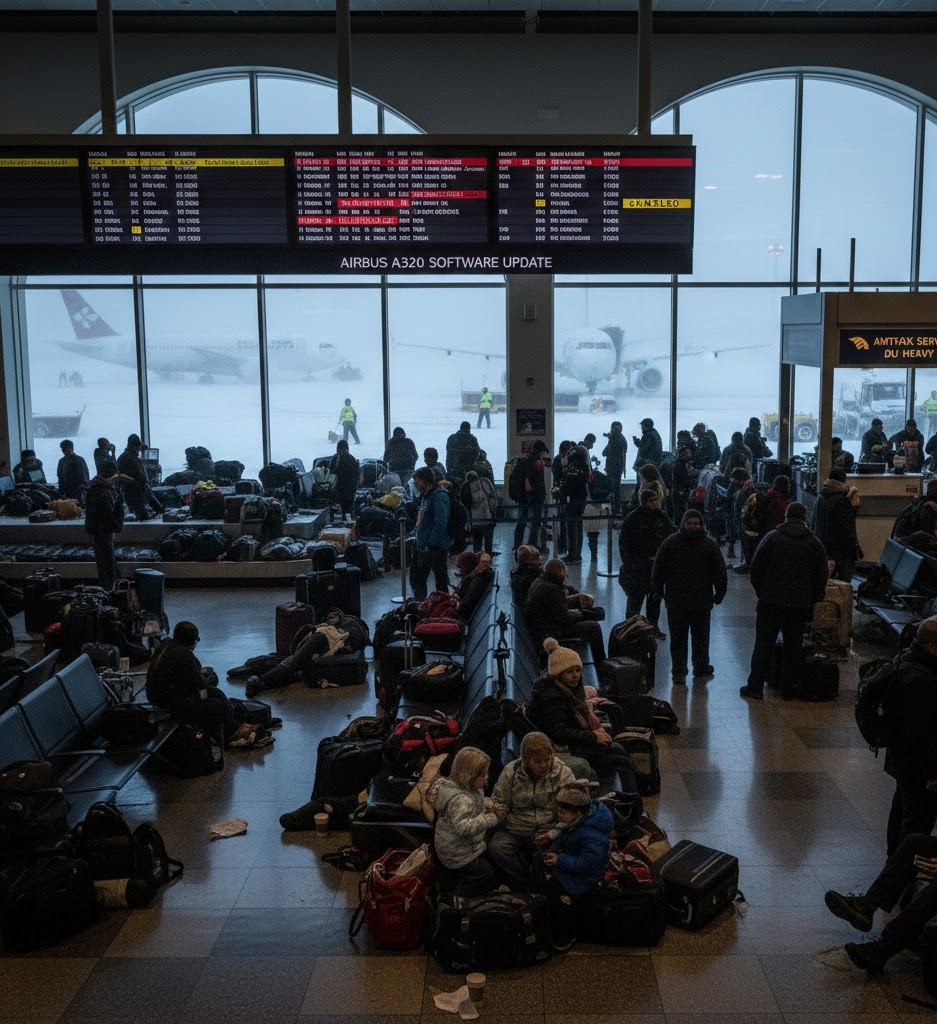
Post-Thanksgiving Travel Disrupted: Massive Flight Delays and Cancellations
The chaotic conclusion to America’s busiest travel holiday delivered a frustrating finale to millions of travelers eager to return home after Thanksgiving celebrations. What should have been a smooth journey back to normal routines instead became an exercise in patience, resilience, and creative problem-solving as a perfect storm of winter weather and technical complications created nationwide transportation disruptions that left countless passengers stranded in airports and train stations.
The post-Thanksgiving travel period consistently ranks among the year’s most challenging for transportation systems. Airports operate at maximum capacity, airlines schedule additional flights to accommodate holiday demand, and any disruption to this delicately balanced system creates cascading delays that ripple across the entire network. When Mother Nature combines forces with technical issues affecting aircraft fleets, the result transforms manageable inconvenience into full-scale travel catastrophe.
This year’s disruptions proved particularly severe, affecting not only air travelers but also those relying on rail service as winter storms blanketed critical transportation corridors with heavy snow while regulatory compliance requirements grounded significant portions of certain airlines’ fleets. The combination tested both infrastructure resilience and passenger patience while highlighting the vulnerability of modern transportation systems to simultaneous weather and technical challenges.
The Toll of Air and Rail Chaos
Key Statistics from Sunday’s Disruptions
The full scope of Sunday’s travel disaster becomes clear through the staggering statistics that quantify how many journeys were interrupted, how many families remained separated from home, and how extensively the disruptions affected the national transportation network. These numbers represent not abstract data points but real people whose holiday conclusions turned into extended ordeals.
Flight tracking services recorded massive cancellation numbers that exceeded typical operational disruptions by substantial margins. Thousands of flights that passengers had booked weeks or months in advance simply never departed, forcing travelers to scramble for alternatives, extend hotel stays, or resign themselves to spending additional unplanned days away from home and work obligations.
Delay statistics painted an equally grim picture, with average delays extending far beyond the minor schedule adjustments that characterize normal operations. Many flights that eventually departed did so hours behind schedule, creating missed connections, disrupted ground transportation arrangements, and cascading complications for passengers whose carefully planned itineraries dissolved into improvisation and uncertainty.
The percentage of affected flights relative to total scheduled operations provided another metric for understanding disruption severity. When cancellation and significant delay rates climb into double digits, the impact extends beyond directly affected passengers to overwhelm customer service systems, exhaust available hotel accommodations near airports, and create crowding conditions that stress airport facilities beyond their design capacity.
Rail service disruptions added another dimension to the transportation crisis, affecting passengers who had specifically chosen train travel to avoid potential airport hassles or who relied on rail connections to reach smaller cities not served by major airports. When both air and rail systems experience simultaneous disruptions, travelers lose the backup options that might normally provide alternative routes home.
Geographic Areas and Airports Particularly Affected
The disruptions didn’t distribute evenly across the country but instead concentrated in specific regions and major airport hubs where weather conditions and technical issues converged to create particularly severe impacts. Understanding which areas bore the brunt of cancellations and delays provides insight into both the causes and consequences of the travel chaos.
Major Midwest hubs experienced some of the most severe disruptions as winter storm systems moved through the region dumping heavy snow and creating hazardous conditions that grounded flights, prevented ground crews from safely servicing aircraft, and made runway operations dangerous or impossible. Chicago O’Hare International Airport, one of the nation’s busiest aviation hubs and a critical connection point for travelers crossing the country, saw operations severely compromised.
Detroit Metropolitan Airport faced similar challenges as the same storm system that hammered Chicago continued eastward into Michigan. The combination of heavy snowfall, reduced visibility, and runway surface conditions forced flight cancellations while preventing departing aircraft from safely accessing taxiways and runways. The airport’s critical role as a Delta Air Lines hub meant that disruptions here rippled throughout the carrier’s national network.
East Coast airports, while potentially avoiding the worst winter weather, still experienced significant disruptions as the cascading effects of Midwest cancellations prevented aircraft from arriving to operate their next scheduled flights. This domino effect meant that passengers in cities experiencing perfectly clear weather still faced cancellations because their aircraft and crews were stuck hundreds or thousands of miles away in storm-affected regions.
The concentration of disruptions at major hub airports proved particularly problematic because these facilities serve as connection points where passengers change planes to reach final destinations. A single cancelled flight at a major hub doesn’t just affect passengers traveling directly between that hub and their origin city—it strands dozens or hundreds of connecting passengers whose journeys depend on that cancelled flight, creating exponential impact far exceeding the simple count of cancelled flights.
Report on Rail Service Disruption (Amtrak)
Amtrak, America’s national passenger rail service, faced its own weather-related challenges that compounded travelers’ difficulties by eliminating rail travel as a viable alternative to cancelled flights. The rail disruptions affected multiple routes across regions experiencing winter storm impacts, leaving passengers who had specifically chosen train travel to avoid potential airport problems just as stranded as their airborne counterparts.
Heavy snowfall along critical rail corridors forced service suspensions or severe delays as safety protocols prevented trains from operating at normal speeds through areas with reduced visibility and potential track obstructions. Unlike aircraft that can sometimes route around weather systems, trains must follow fixed tracks that often pass directly through affected areas, leaving no alternative when conditions deteriorate beyond safe operating parameters.
The disruptions particularly affected Amtrak’s long-distance routes that traverse multiple states and weather zones. A storm system impacting just one section of these routes can delay or cancel entire journeys spanning thousands of miles, affecting passengers whose origin and destination cities might be experiencing perfectly clear weather but whose trains cannot reach them due to conditions hundreds of miles away.
Amtrak’s service disruptions also highlighted the interconnected nature of the national rail network. Delayed trains create cascading impacts as they miss scheduled passing points with trains traveling in opposite directions, forcing those trains to wait for tracks to clear. Equipment and crew scheduling depends on trains arriving on time to turn around for return journeys, so significant delays in one direction ripple through the schedule affecting service in both directions.
For travelers who had selected rail service specifically to avoid the uncertainties and discomforts of air travel, the simultaneous disruption of both transportation modes represented a particularly frustrating outcome. The absence of viable alternatives forced many to simply wait out the weather, accepting that their return home would occur on nature’s schedule rather than their carefully planned itineraries.
The Winter Storm: Major Factor in Disruption
Storm Scale and Intensity (Midwest and Great Lakes)
The meteorological reality driving much of the travel chaos arrived in the form of a powerful winter storm system that swept across the Midwest and Great Lakes regions with timing seemingly calculated to maximize disruption during one of the year’s busiest travel periods. This wasn’t a minor weather event producing nuisance snow flurries but rather a significant winter storm delivering substantial snowfall accumulation and creating hazardous conditions across multiple states.
Meteorologists tracked the storm system as it developed and moved eastward from the Plains states into the heavily populated Midwest corridor. The storm’s path ensured that it would impact multiple major metropolitan areas and critical transportation hubs simultaneously, overwhelming the capacity of even well-prepared snow removal and winter operations teams to maintain normal operations.
Snowfall totals varied across affected areas but reached impressive accumulations in the hardest-hit locations. Some areas measured snow in feet rather than inches, creating conditions that rendered roads impassable and forced airport runway closures until snow removal equipment could clear sufficient space for aircraft operations. The rate of snowfall also mattered—when snow accumulates faster than removal crews can clear it, even heroic efforts cannot maintain safe operational surfaces.
Wind conditions accompanying the snow created additional complications through blowing and drifting that reduced visibility and redeposited snow on runways and taxiways shortly after they were cleared. These whiteout conditions made visual operations impossible and strained even sophisticated instrument landing systems that allow operations in reduced visibility. When pilots cannot see runways even on final approach, safe landings become impossible regardless of how much technology assists.
Temperature profiles associated with the storm created varying snow characteristics affecting how easily removal equipment could clear it and how quickly it could be accomplished. Heavy, wet snow requires different handling than light, powdery accumulation, and the wrong equipment or techniques can actually worsen conditions rather than improving them.
Heavy Snowfall Impacts on Travel
The direct physical impact of heavy snow accumulation created multiple mechanisms through which travel operations were disrupted. Understanding these various impact pathways illustrates why winter storms prove so devastating to transportation systems despite advance warning and significant preparation efforts.
Airport runway and taxiway operations depend absolutely on clear, safe surfaces for aircraft to accelerate, decelerate, and maneuver. Snow accumulation compromises these surfaces in multiple ways—reducing traction necessary for controlled movement, obscuring pavement markings and edge lights that pilots use for navigation, and creating uneven surfaces that can damage aircraft or cause loss of control. Even relatively modest snow depths force airport closures until removal can restore safe conditions.
Aircraft themselves cannot operate when covered with snow and ice. Federal regulations require that aircraft surfaces be completely clean and free of frozen contamination before takeoff because even small amounts of ice or snow on wings dramatically alter their aerodynamic properties and can cause catastrophic loss of lift. Deicing operations that remove this contamination require specialized equipment, trained personnel, and substantial time—creating bottlenecks that limit how quickly aircraft can be processed for departure even after runways are cleared.
Ground service equipment necessary for aircraft operations—baggage carts, fuel trucks, catering vehicles, passenger boarding bridges—all experience reduced mobility and functionality in heavy snow. When ground crews cannot safely maneuver around aircraft or cannot access aircraft doors and cargo holds due to snow accumulation, even aircraft ready to fly cannot depart because passengers, baggage, and cargo cannot be loaded.
The human element cannot be overlooked. Airport and airline personnel must physically reach their workplaces to perform their duties, but heavy snowfall makes commuting difficult or impossible. Staffing shortages resulting from employees unable to reach airports compound all the other weather-related challenges and can prevent resumption of normal operations even after weather conditions improve.
Detailed Consequences for Chicago and Detroit Airports
Chicago O’Hare International Airport, consistently ranking among the world’s busiest aviation facilities, experienced particularly severe disruption as the winter storm system stalled over the region delivering prolonged heavy snowfall. The airport’s critical role as a major United Airlines and American Airlines hub meant that disruptions here affected the entire national aviation network.
O’Hare’s operations team implemented snow removal protocols involving hundreds of pieces of specialized equipment and personnel working in coordinated teams to clear the airport’s multiple runways and extensive taxiway system. Despite these heroic efforts, snowfall rates exceeded clearance capacity during the storm’s peak intensity, forcing complete runway closures that grounded all arriving and departing traffic.
The backlog created during closure periods couldn’t be quickly resolved once runways reopened. Aircraft that had been scheduled to depart during closure windows needed repositioning, new deicing, and fresh crew scheduling. Arriving aircraft that diverted to alternate airports needed to either continue passenger journeys to Chicago via other means or return once operations resumed. The complex logistics of recovering from major operational disruptions typically require days to fully resolve even after weather clears.
Detroit Metropolitan Airport faced a similar scenario as the storm system continued eastward. As a major Delta Air Lines hub with extensive international service, disruptions here affected not just domestic travelers but also international passengers making connections and cargo operations supporting time-sensitive freight movements.
The airport’s location near the Great Lakes added complications through lake-effect snow that can continue even after the primary storm system passes. This phenomenon occurs when cold air masses move across relatively warm lake waters, picking up moisture that then deposits as heavy snow when the air mass reaches land. Lake-effect snow can be highly localized and difficult to predict precisely, creating uncertainty about when conditions will improve sufficiently to resume normal operations.
Both airports eventually resumed operations as weather conditions improved and snow removal efforts succeeded in clearing critical surfaces. However, the recovery process involved managing stranded passengers, repositioning aircraft to where they were needed for scheduled flights, reconstituting crew schedules disrupted by the cancellations, and working through massive backlogs of delayed cargo and mail. Full operational recovery typically extends days beyond the weather event itself.
Technical Problems: Airbus A320 Software Updates
The FAA Mandate and Impact on Airline Fleets
Compounding the weather-related disruptions, certain airlines faced an entirely separate operational challenge stemming from Federal Aviation Administration regulatory compliance requirements affecting their Airbus A320 family aircraft. This technical issue, completely independent of winter weather, grounded significant portions of some carriers’ fleets at precisely the worst possible time.
The FAA issued an airworthiness directive requiring software updates to address potential safety concerns in certain Airbus A320 family aircraft systems. These updates, while necessary for continued safe operation, required that each affected aircraft be taken out of service temporarily while technicians installed the new software and conducted required testing to verify proper installation and functionality.
The timing of the compliance deadline coinciding with the post-Thanksgiving travel period created a perfect storm of reduced fleet availability just when demand peaked and weather was already causing significant disruptions. Airlines faced impossible choices between maintaining full schedules with non-compliant aircraft (illegal and unsafe) or cancelling flights to remove aircraft from service for the required updates (legal and safe but devastating to passengers and operations).
The scope of impact varied by carrier depending on how many Airbus A320 family aircraft each operated and how quickly each carrier could process the required updates. For airlines with large A320 fleets, the mandate effectively removed significant percentages of total capacity from service simultaneously, forcing massive cancellations that left thousands of passengers stranded regardless of weather conditions.
The regulatory compliance requirement illustrated the constant tension in aviation between operational demands and safety imperatives. While passengers understandably felt frustrated by cancellations, the alternative—allowing aircraft to operate with potentially unsafe software configurations—was clearly unacceptable. The FAA’s unwillingness to extend compliance deadlines reflected justified prioritization of safety over convenience.
Managing Cancellations at JetBlue
JetBlue Airways found itself particularly affected by the Airbus software update requirement given the airline’s heavy reliance on A320 family aircraft throughout its fleet. The carrier operates numerous A320s and A321s on routes across its network, meaning that the grounding requirement affected a substantial portion of total capacity.
The airline faced the challenge of determining which flights to cancel to minimize passenger impact while ensuring compliance with the FAA directive. This optimization problem involved complex calculations considering factors including passenger loads, connection impacts, crew positioning, aircraft utilization, and network connectivity. No perfect solution existed—every cancellation disappointed and inconvenienced passengers.
JetBlue’s operational teams worked to proactively notify affected passengers and rebook them on alternative flights where possible. However, the combination of reduced capacity due to grounded aircraft and peak holiday travel demand meant that available alternative flights filled quickly, forcing many passengers to accept delays of a day or more before seats became available.
The airline also faced the logistical challenge of efficiently processing required software updates across its affected fleet. Each aircraft required dedicated technician time and hangar space, creating bottlenecks that limited how quickly aircraft could be returned to service. The airline mobilized additional technical personnel and coordinated with Airbus support teams to maximize throughput, but the sheer number of aircraft requiring updates meant that fleet restoration would take time.
Customer service systems became overwhelmed as frustrated passengers sought rebooking assistance, compensation, and answers about when normal operations would resume. JetBlue’s representatives fielded countless calls, emails, and social media inquiries from passengers whose travel plans had been disrupted through no fault of their own. The airline worked to provide transparent communication while managing expectations about realistic timelines for service restoration.
Intervention by Frontier and Spirit Airlines
Frontier Airlines and Spirit Airlines, both ultra-low-cost carriers operating significant Airbus A320 family fleets, faced similar challenges from the software update mandate. These airlines’ business models depend on maximizing aircraft utilization and operating with minimal spare capacity, making the sudden removal of multiple aircraft from service particularly disruptive.
Both carriers implemented widespread cancellations as they pulled aircraft from service to complete the required updates. The cancellations disproportionately affected certain routes and cities where these airlines provided the primary or only service, leaving passengers in those markets with particularly limited alternatives.
The timing proved especially problematic for budget-conscious travelers who had specifically selected these low-cost carriers to make holiday travel affordable. Unlike passengers on major network carriers who might be rebooked on partner airlines, Frontier and Spirit passengers often had fewer alternatives given these carriers’ limited interline agreements. Many passengers faced choices between paying substantial premiums to purchase tickets on other airlines or simply waiting until their original carriers could accommodate them on later flights.
Both airlines worked to prioritize completing software updates on aircraft critical to their highest-demand routes and most important network connections. This triage approach aimed to restore maximum capacity quickly even if some aircraft remained grounded longer. The strategy reflected practical reality that limited technical resources and hangar space prevented simultaneous processing of entire fleets.
The incident highlighted vulnerabilities in ultra-low-cost carrier business models that achieve affordability partly through operating with minimal slack capacity and limited interline relationships. While this approach keeps ticket prices low during normal operations, it leaves little resilience to absorb unexpected disruptions whether caused by weather, technical issues, or regulatory compliance requirements.
Future Outlook and Related Content
Weather Monitoring and Risks of Additional Delays
As travelers continued working through the backlog of disruptions and airlines struggled to restore normal operations, meteorologists monitored weather patterns for potential additional complications that could delay recovery or create new problems. The unfortunate reality of winter travel is that one storm system often precedes another, creating waves of disruption throughout the season.
Weather forecasts for the days following the major disruption suggested the possibility of additional winter weather affecting different regions. While perhaps not matching the intensity of the system that caused the initial chaos, even moderate weather events can prevent full operational recovery when systems are already stressed and backlogs already exist.
Airlines and airports maintained heightened operational vigilance, monitoring forecasts closely and preparing to implement weather contingency plans if conditions deteriorated. This proactive approach aimed to prevent being caught unprepared by rapidly changing conditions and to make informed decisions about potential preemptive cancellations rather than waiting until last-minute weather developments forced reactive responses.
Passengers with upcoming travel plans were advised to monitor flight status closely, consider travel insurance for protection against additional disruptions, and build flexibility into their schedules where possible. The uncertainty created by both weather forecasts and ongoing recovery from earlier disruptions made firm predictions about operational reliability difficult.
The broader lesson from the disruption involves recognizing that winter travel inherently carries risks that cannot be completely eliminated regardless of how well airlines and airports prepare. While technology, procedures, and equipment have improved dramatically over decades, Mother Nature ultimately determines when aviation operations can safely proceed, and passengers must accept some level of uncertainty as the price of winter travel.
Other News (Source Links)
The travel disruptions, while dominating headlines and traveler attention, represented just one story among many competing for public awareness during this busy news period. Other developments across various domains continued unfolding even as millions of travelers struggled to reach their destinations.
Related transportation news might include updates on infrastructure investment, airline industry financial performance, new aircraft deliveries, route announcements, or regulatory developments affecting air travel. These stories, while perhaps less immediately urgent than real-time flight cancellations, shape the long-term evolution of transportation systems that travelers depend upon.
Broader news coverage continued addressing political developments, economic indicators, international affairs, public health updates, and countless other topics that together constitute the information landscape modern citizens navigate. The travel chaos, while certainly significant to those directly affected, competed for attention with these other important stories.
The post-Thanksgiving travel period also typically generates consumer spending data that economists analyze for insights into holiday shopping patterns and overall economic health. Retail performance during the critical Black Friday through Cyber Monday period provides early indicators about consumer confidence and spending that forecast broader economic trends.
As immediate travel chaos gradually resolved and passengers eventually reached their destinations, attention would naturally shift toward analyzing what went wrong, whether the disruptions could have been prevented or better managed, and what lessons might inform future operational planning to build greater resilience against similar perfect storms of weather and technical challenges.