The 2026 Tesla Model Y L & US Incentive Master Guide
Introduction to the Model Y L
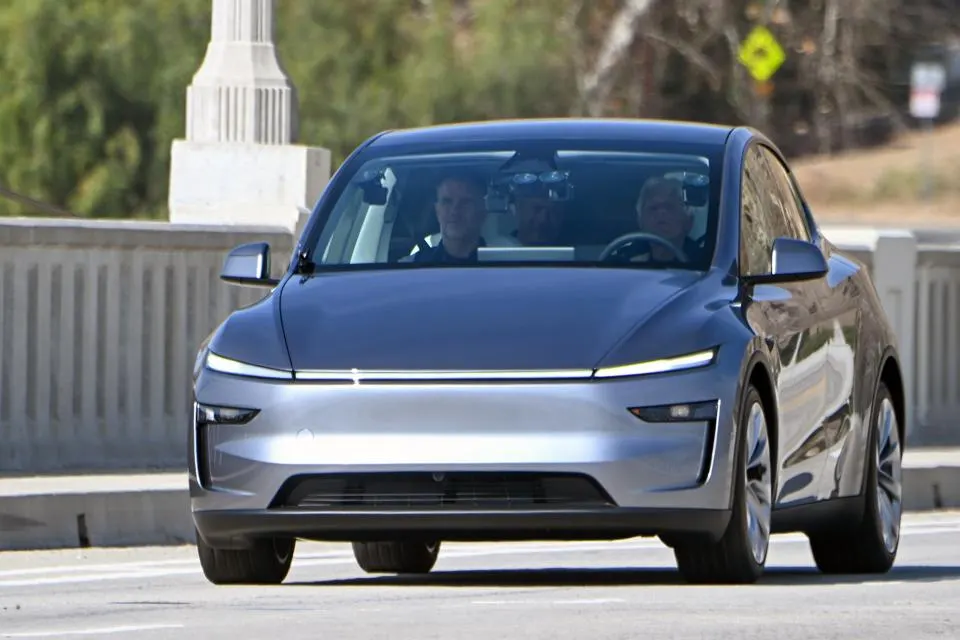
Tesla just filled the biggest hole in its own lineup. With the Model S and Model X both winding down production earlier this year, the automaker had nothing left for families who need real third-row seating — until now. The Model Y L, a stretched, six-seat version of Tesla’s best-selling SUV, officially landed in the US and Puerto Rico this week as the closest thing Tesla currently offers to a Model X replacement.
This isn’t the cramped third-row option Tesla bolted onto the standard Model Y back in January, which reviewers largely panned. It’s a genuinely longer vehicle built for families cross-shopping the Kia EV9, Hyundai Ioniq 9, or a used Model X who want usable adult space in all three rows.
Technical Specifications & Comparisons
The engineering comes down to one number: a 3,040 mm wheelbase, roughly 119.7 inches — about six inches longer than the standard Model Y, adding roughly seven inches of overall length, almost entirely dedicated to the third row.
Inside, Tesla ditched the bench-seat approach entirely for a 2+2+2, six-seat layout: heated and ventilated captain’s chairs with power-adjustable armrests in row two, and a genuinely usable third row with heated seats, power recline, and built-in child-seat anchors. Third-row legroom reportedly comes in around 33 inches — comparable to a Ford Explorer or Kia Telluride, a real improvement over the standard Model Y’s cramped option. Second-row passengers get their own 8-inch touchscreen, dedicated air vents, and cooled wireless charging pads.
Performance isn’t a compromise: Tesla lists a 4.4-second 0-60 mph time, quicker than the standard Model Y, with 325 miles of EPA-estimated range. It ships standard with dual-motor all-wheel drive — no single-motor option exists — plus adaptive damping, staggered tires, and 250 kW Supercharging.
Financial Breakdown: Price vs. Value
The Model Y L launches exclusively as a “Launch Series” trim priced at $61,990 — about $12,000 more than the standard Model Y Premium AWD, and pricier than even the Model Y Performance. That upcharge isn’t just paying for length. It bundles in premium floor mats, suede dashboard inserts, custom puddle lights, unique badging, and any exterior paint, interior color, and wheel option at no extra cost — options that carry their own price tags on other trims.
Beyond the hardware, Launch Series buyers get one year each of Full Self-Driving (Supervised), free Supercharging, and Premium Connectivity. Depending on how much you drive and charge, that can realistically offset several thousand dollars of the premium in year one. Just don’t expect a cheaper trim right away — Tesla typically opens new models at the top of the range before rolling out more affordable configurations later.
Federal Incentive Programs
This trips up a lot of buyers, because the federal EV incentive landscape looks nothing like it did a year ago. The One Big Beautiful Bill Act (OBBBA), signed in July 2025, eliminated the federal $7,500 new-EV purchase credit for vehicles acquired after September 30, 2025. The Model Y L does not qualify for a federal purchase credit.
What is still available: individuals can deduct up to $10,000 per year in interest paid on a loan for a new, personal-use vehicle finally assembled in the US — and the Model Y L, built at Giga Texas, qualifies. This above-the-line deduction applies even if you take the standard deduction. It phases out for single filers with modified adjusted gross income above $100,000 ($200,000 joint) and disappears entirely at $150,000 ($250,000 joint). It applies to loans, not leases, through the 2028 tax year.
Business owners have a more powerful lever: Section 179 expensing lets businesses deduct the full cost of qualifying vehicles used more than 50% for business in the year placed in service, rather than depreciating over several years. OBBBA raised the Section 179 cap to $2,560,000 for 2026, phasing out at $4,090,000 — a genuinely useful strategy for fleet buyers.
One more note: the Alternative Fuel Vehicle Refueling Property Credit (Section 30C), worth up to $1,000 on home charging equipment in eligible census tracts, expired June 30, 2026 — days before this launch. If you’re reading this after that date, it’s no longer available for new residential installations.
State and Local Utility Savings
With federal purchase incentives gone, state and utility-level programs matter more than ever, and they vary enormously by location. Some are non-cash perks: HOV lane access, discounted parking, and reduced tolls are still common in states like California and Colorado. Others are straightforward cash rebates on the vehicle or charging equipment.
Utility-specific charging incentives hide real money. Alabama Power offers a one-time $500 rebate for a Level 2 home charger, plus an EV-specific time-of-use rate. Eversource, serving Connecticut and Massachusetts, offers rebates toward wiring and panel upgrades up to $700–$2,700 depending on your rate plan and community, plus ongoing bill credits for managed charging. LADWP’s Charge Up LA! program provides $1,000 per residential Level 2 charger — $1,500 for Lifeline or EZ-SAVE customers — plus $250 for a dedicated time-of-use meter.
Don’t assume your utility has nothing to offer just because the federal credit is gone. These programs are often stackable and change frequently, so check your specific provider before installing anything.
Energy Resilience: A Word of Caution
If you’re pairing your Model Y L with home solar or a Powerwall, the federal picture has shifted here too. The 30% Residential Clean Energy Credit (Section 25D) was eliminated by OBBBA for any system placed in service after December 31, 2025, with no phase-down. Installing solar or a Powerwall in 2026 means no federal credit as a direct purchaser. Solar leases or power purchase agreements can still access a related commercial credit through 2027, and several states still offer their own battery rebates — just don’t expect the federal math that applied a year ago.

model y rim wheel
Eligibility and How to Claim
For the car loan interest deduction, confirm the vehicle’s final assembly location, listed on the vehicle information label at the dealership — Tesla’s Giga Texas build should qualify, but verify on your specific unit. Your VIN and loan interest paid get reported on the appropriate IRS form when you file, and lenders must now report qualifying interest directly to the IRS.
Given how much this landscape has shifted — and how much your savings depend on income, business use, and location — a few minutes with a tax professional pays for itself. IRS guidance is still being refined into 2026, so check IRS.gov or your state energy office’s site for the current version of any program mentioned here before you buy or install anything.
Configurez votre Model Y
Model Y – SUV électrique de taille intermédiaire
Tesla Model Y Neuve au Maroc: Prix, Versions et …