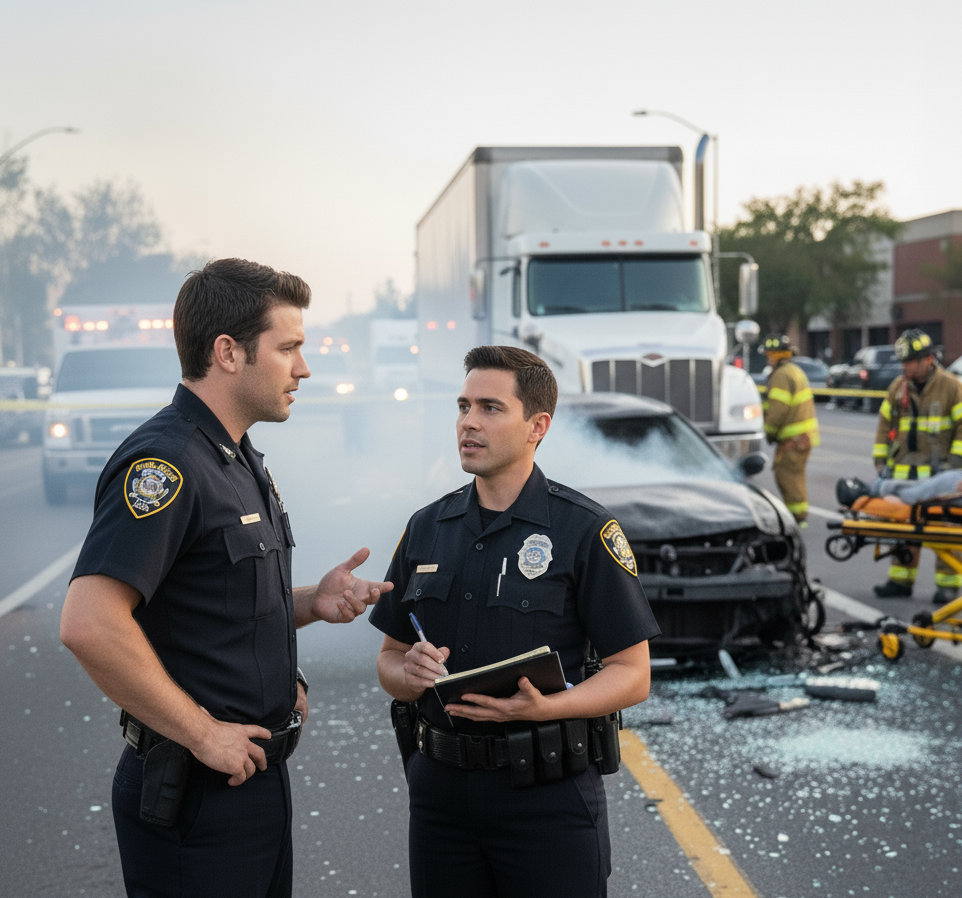
Toronto Police Service: History, Structure, and the Accountability Debate Shaping Its Future
Introduction to the Toronto Police Service
The Evolution of Policing (1834–Present)
TPS traces its roots to 1834, when Toronto’s newly incorporated city government established the first municipal police force in North America. The early decades weren’t exactly a model of professional law enforcement. For much of the 19th century, the force was tangled up in local politics, with officers loyal to the aldermen who appointed them, and periodically deployed to break up opposition rallies or take sides in sectarian street violence between Irish Catholics and the Orange Order. An 1841 provincial government report famously described the Toronto police as “formidable engines of oppression” — not exactly a flattering start.
The force’s next major transformation came in 1957, when the Toronto Police Department merged with 12 other municipal forces across the newly created Municipality of Metropolitan Toronto, forming the Metropolitan Toronto Police Force under Chief John Chisholm. This unification centralized authority across a rapidly growing metropolitan area that had previously been policed by a patchwork of separate departments. The name changed again in 1998, when the amalgamation of the City of Toronto itself gave rise to the modern Toronto Police Service, the name the organization has carried ever since.
Organizational and Operational Framework
Today, TPS is organized into two geographic Field Commands — West and East — which oversee 17 individual policing divisions across the city, supported by specialized units handling everything from traffic enforcement to major crime investigations.
Among the more distinctive specialized units is the Mounted Unit, established in 1886 and now one of the oldest continuously operating units in North America. It currently consists of roughly 25 horses and their officers, based out of the Horse Palace at Exhibition Place. The unit’s role is part crime prevention, part crowd management, and part community engagement — mounted officers get a genuinely different vantage point for spotting problems in crowds, and the horses themselves tend to draw a friendlier public reaction than a typical patrol car.
On the mental health front, TPS operates Mobile Crisis Intervention Teams (MCIT), which pair a specially trained officer with a mental health nurse from one of six partner hospitals to respond to crisis calls. The program, running since 2000, currently spans 16 of the city’s divisions with roughly 25 officers and 35 nurses. It’s often cited as a model for co-response policing, and it has evolved over time from a strictly secondary response — arriving only after a patrol officer confirms a scene is safe — into something closer to genuine co-response for lower-risk calls. That said, its record is more complicated than a simple success story: TPS itself confirmed in late 2025 that it was reviewing the program specifically to reduce the service’s “reliance” on it, and community advocates have long argued that requiring a patrol officer to arrive and secure the scene first defeats much of the program’s purpose in genuinely urgent crises.
Strengthening Accountability
Civilian oversight of TPS runs primarily through Ontario’s Special Investigations Unit (SIU), an arm’s-length agency mandated to investigate any incident involving police that results in serious injury, death, or allegations of sexual assault. When the SIU’s threshold isn’t met — as happened, for instance, in a widely reported case involving a mounted officer during the 2022 convoy protests — cases get referred back to TPS itself.
Body-worn cameras (BWCs), rolled out service-wide following a 2016 pilot project that saw strong public and officer approval, add another layer of accountability. TPS policy requires officers to activate their cameras before enforcement or investigative interactions with the public, with narrow exceptions, and recordings are retained under strict rules — footage can’t be edited except by designated video services staff, and access by the SIU or the province’s police oversight body is supposed to be provided promptly during an active investigation. Advocacy groups, including the Ontario Human Rights Commission, have pushed for the policy to go further, including mandatory public disclosure of footage in serious use-of-force cases and disaggregated race-based reporting on who’s being recorded and why.
The Future of Public Safety in Toronto
Money remains the central flashpoint. TPS’s 2026 budget proposes a net operating budget of roughly $1.43 billion funded through property taxes — an increase driven largely by contract-mandated salary increases and the hiring of 143 net new officers. Under that proposal, close to one in five property tax dollars in Toronto — about 18.6% — goes toward policing, second only to transit funding. Critics point out that a 2022 city auditor’s report found that roughly 40% of calls in several lower-priority categories could plausibly be handled by non-police alternative responses, potentially saving tens of thousands of officer hours redirected elsewhere.
That tension between funding levels and demonstrated outcomes has been sharpened further by a major legal development: in January 2026, the Ontario Superior Court certified a class action lawsuit against the Toronto Police Services Board and several current and former chiefs over the practice of “carding” — stopping people without reasonable suspicion and retaining their personal information — on behalf of Black, First Nations, Inuit, and Métis people affected since December 2011. The court rejected the board’s argument that carding had stopped or never occurred as alleged, and the case, seeking upward of $250 million along with a public apology, now moves toward a common-issues trial. Combined with long-standing findings from the 2018 Tulloch Report on street checks, the lawsuit keeps a decades-old accountability question squarely in front of the public as TPS heads into its next budget cycle.